Golf in the rain comes down to three things: keep your hands, grips and clubface dry, allow for a softer and slower course, and slow your routine down. A towel kept out of the weather does more for a wet round than any other single item, because a dry grip is the one thing you cannot fake.
Is it worth playing golf in the rain?
Yes, for most rain. Drizzle and showers are perfectly playable, and the course is often quieter than on a dry Saturday. Your scores may not be your best, but you will learn more about your short game and your tempo than you do on a still day.
Sometimes the course decides for you. If the club closes the greens or the whole course because water is lying on them, that is the end of it. If you can see standing water before or after you take your stance, that is temporary water under the Rules of Golf, and you take free relief from it.
It is not for every kind of weather. If you hear thunder or see lightning, you walk off, every time. No round is worth it.
How to keep your hands and grips dry
This is the part that decides a wet round, and it is a routine rather than a piece of kit. A soaked towel cannot dry a grip, so everything below is about keeping one surface dry from the first tee to the last green.
- Keep one dry surface. Use a double-sided towel, or two towels. One face is for grooves, the ball and mud. The other is kept for grips and hands only, and never touches the clubface.
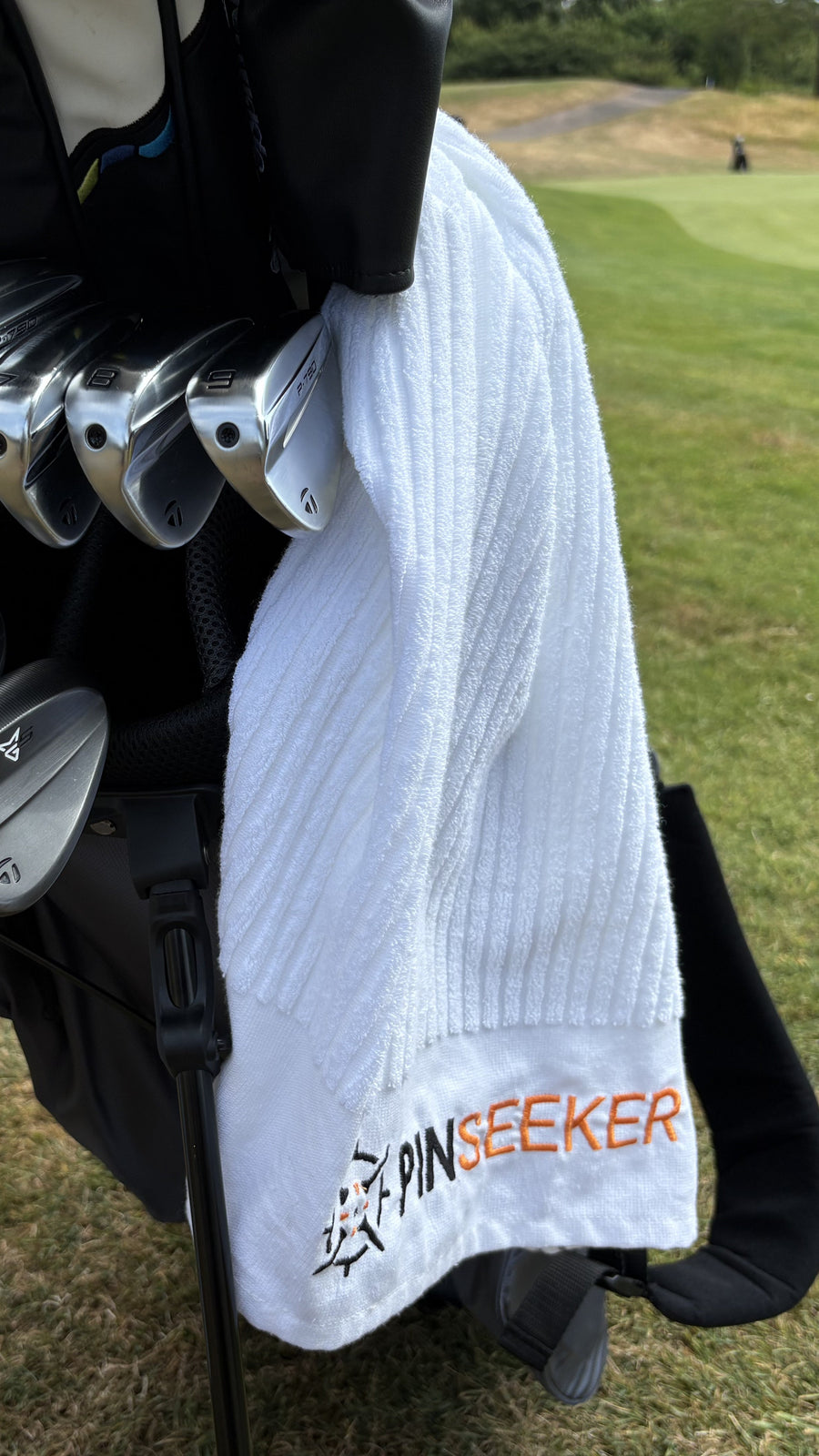
- Decide where the towel lives. Under the bag hood, or hung from the umbrella spokes inside the canopy. Never on the outside rail of the bag, where it is soaked within a few holes.
- Dry the grip, not the glove. Wipe the grip before each shot rather than trying to dry a saturated glove.
- Rotate spare gloves. Keep them in a sealed plastic bag and swap through the round. Rain gloves, usually sold as a pair, work differently: they grip better when wet rather than staying dry.
- Keep your normal grip pressure. The instinct is to squeeze harder, and it costs clubhead speed. A dry grip lets you hold the club the way you always do.
A soaked towel cannot dry a grip, so keep one face of it somewhere the rain cannot reach.
Field note: a Saturday medal in September, steady rain from the fourth hole on. By the turn the towel on the outside of my bag was useless, so I folded it once and tucked the dry half under the hood, and used only that half on the grips for the back nine. I lost two balls on the front nine and none on the back, and the only thing that changed was a dry grip.
A 40 × 100cm double-sided microfibre towel suits this well. Fold it once and one face stays on the inside, out of the rain. That is how the Tour Golf Towel is built to work. When the course is genuinely wet, a cotton towel is the better reserve, because cotton holds more water per wipe: the 550GSM Caddy Golf Towel is cut for that job.
How a wet course changes your shots
Picture a UK parkland course after a wet week. The fairways are soft, the rough is heavy and the ball behaves differently from the first tee. The same few changes apply almost anywhere.
The ball carries less through heavy, wet air, and it stops where it lands with little roll. Take more club and fly it to the target rather than planning on a bounce. Water and grass between the clubface and the ball cause fliers, so wipe the face before every shot.
Wet sand in bunkers is firmer than dry sand, so expect the club to bounce rather than dig. Greens run slower, so putt with more pace than your eye suggests. And expect muddy and plugged balls: take your time, clean what you are allowed to clean, and accept a few awkward lies as part of the day.
What to wear and carry
This is the order that pays, from the first thing to sort to the last. Dry hands and grips come first. Then a cap that keeps rain off your face and glasses. Then a waterproof jacket, then trousers.
On the cap, a shell that is water-repellent beads rain and sheds it off the brim, which keeps your eyeline clear. If you want the detail, here is how a coated cap differs from a membrane one.
In the bag, carry an umbrella, a spare towel, spare gloves and a rain hood for the bag itself. If you are choosing what to buy, our rain gear guide puts the kit in order.
Cold changes the round as much as rain does. What to carry from November on, from temporary greens to frost delays, is in winter golf in the UK.
A shot-by-shot routine for a wet round
- Before the shot: take the dry face of the towel to your grip and hands.
- At address: put your glove on last, and keep the umbrella over the bag once the club is out.
- After the shot: use the wet face on the clubface and grooves.
- Back in the bag: headcovers on, and the towel back under the hood.
- On the green: wipe the ball on the dry end of the towel before you replace it.
- Walking to the next tee: keep your hands in your pockets or under the umbrella.
After the round: drying your kit
Open the bag pockets and stand the bag somewhere dry. Hang towels to dry fully before they go back in, because a damp towel in a closed bag is where trouble starts. Wash microfibre at 30°C with no fabric softener, as in how to wash a golf towel.
Reshape a cap and air dry it on a rounded surface, never in a tumble dryer. Dry shoes away from direct heat. Wipe the clubs down and dry the grips before they go back in the bag.
Frequently Asked Questions
How wet is too wet to play golf?
The club decides. If water is lying on the greens, they may close the greens or the course, so check before you leave. Standing water you can see around your ball or stance is temporary water, and you take free relief. Thunder or lightning means you walk off immediately.
How do you prepare for golf in the rain?
The night before, seal spare gloves in a plastic bag, pack a towel or two, and fit the rain hood and umbrella to the bag. Lay out waterproofs and a cap. Check the club's course status on the morning, so you know the greens are open before you set off.
What do golfers do when it rains?
Most keep playing. They slow their routine down, wipe the grip dry before every shot, and wipe the clubface too. They take more club because the ball carries less and stops quickly. Many find the course quieter, and the round goes well once the routine is settled.
How do you keep golf grips dry in the rain?
Keep one face of your towel for grips and hands only, stored under the bag hood or inside the umbrella canopy. Wipe the grip before every shot rather than trying to dry a soaked glove, and never squeeze harder. A dry grip at normal pressure beats a wet one held tight.
If you are deciding what to buy before the next wet round, our rain gear guide puts it in order.