Winter golf in the UK changes the course more than your swing: temporary greens and tees, mats, preferred lies where the club allows them, frost delays and soft ground that stops the ball rolling. The kit that matters keeps your hands warm and your grips dry for the whole round.
What changes on the course in winter
A parkland course in December and a links or heathland course are two different rounds. Links and sand-based courses drain better than clay-based parkland, so the ball still runs and the ground stays playable. On soft parkland, expect wet fairways, heavy lies and very little roll.
Most clubs change the set-up to protect the turf. You will often meet:
- Temporary greens: a cut area short of the real green, often with a smaller hole area and a bumpier surface. Putt firmly and expect less break than you would normally read.
- Temporary tees and tee mats: you play off a mat or a tee in a different spot.
- Fairway mats: some clubs ask you to carry a small mat and play off it.
- Trolley and buggy restrictions: when the ground is saturated, wheels stay on the paths.
Read the winter rules notice by the first tee or in the clubhouse before you set off. Daylight is shorter, so tee times start earlier and some days you will get fewer holes in.
Winter golf changes the course more than it changes your swing.
Frost delays and frozen greens
Walking on frozen grass damages it, so clubs delay play or close greens until the frost lifts. You either play to temporary greens or wait for the green to thaw. Check the club's course status before you leave home, because a frost delay can push your tee time back or move you onto a different set-up.
Preferred lies: read the notice first
Preferred lies is a Local Rule your club's committee chooses whether to adopt. When it is in force you may lift, clean and place your ball within a relief area that the rule itself specifies (commonly one club-length, a scorecard length or six inches), not nearer the hole, and usually only on closely mown areas. The authority is the R&A's Model Local Rule E-3.
How the ball behaves in cold, wet conditions
A cold ball and heavy air carry less, and soft ground gives you little roll, so take more club and play to carry the ball to where you want it to land. Mud on the ball moves its flight in ways you cannot predict.
In wind, keep the ball low with a shorter, controlled swing. Around the green, chip with less loft on soft ground and let the ball run where it can.
What to carry on a winter round
- Thin layers, not one thick jumper: you can still turn through the ball, and you can add or remove a layer as the round goes on.
- A windproof or waterproof top: wind takes heat away faster than cold air alone.
- Winter golf gloves or mitts: wear them between shots and take them off only for the swing.
- Hand warmers: keep a pair in a pocket so your hands recover between shots.
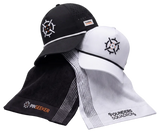
- A warm hat, or a cap: a warm hat suits a properly cold day. A cap suits drizzle: a cap with a water-repellent shell, like the Performance Golf Cap, keeps drizzle off your face and glasses. It is not the right choice for a freezing morning, where a warm hat does the job a cap cannot.
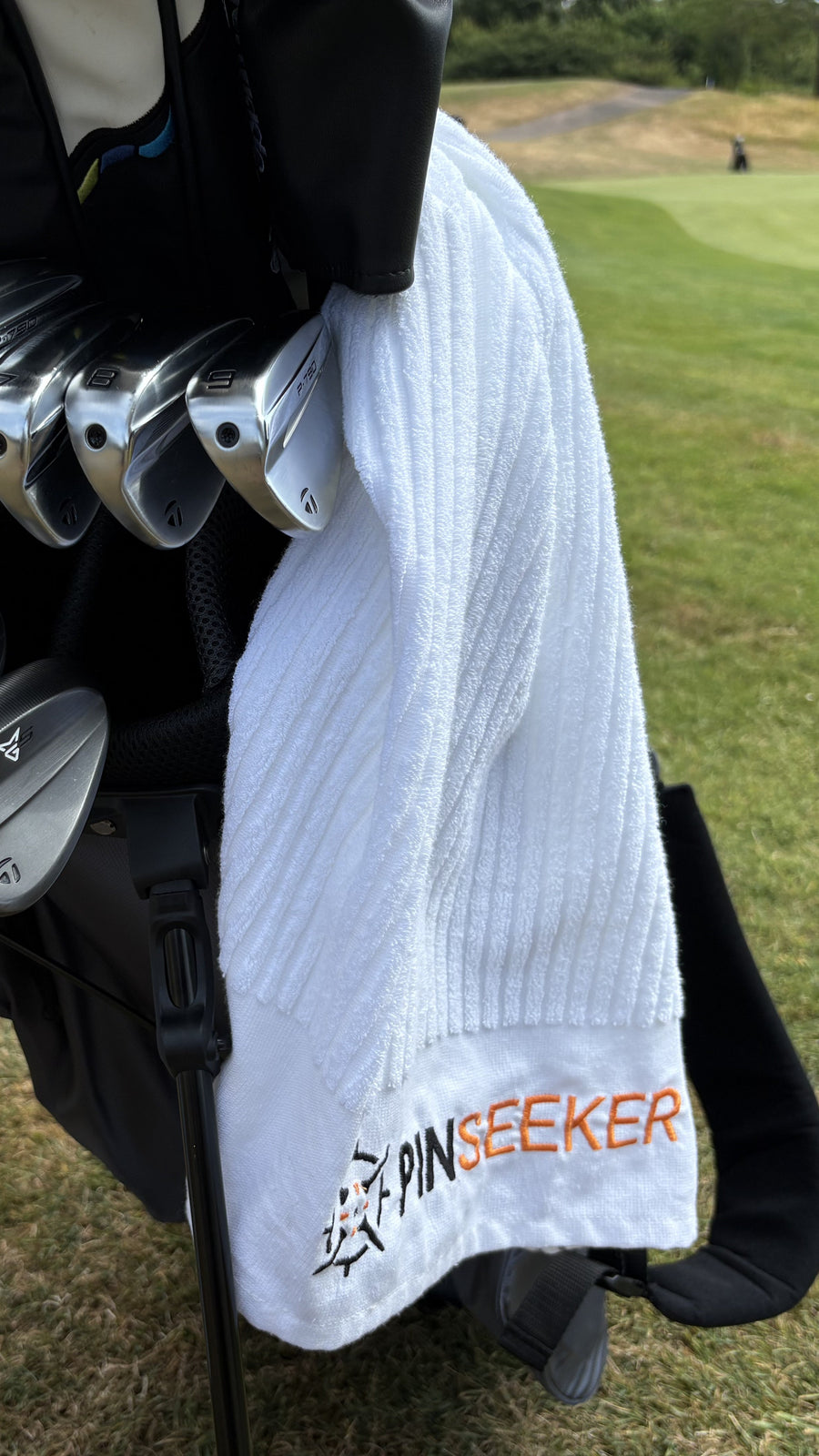
- Two towels: one to work with, one kept dry in the bag. Cotton holds more water per wipe, which suits soaked winter turf, and the 550GSM cotton Caddy Golf Towel is built for that job.
- A spare glove in a sealed bag: a dry glove is worth more than a wet one by the back nine.
- A flask: a hot drink between holes keeps your hands working.
- A fairway mat: if your club requires one.
- Headcovers on: they keep wet and mud off the clubheads in the bag.
- Shoes with grip: wet turf and frost-damp slopes punish a worn sole.
Keeping your hands and grips usable
Cold hands lose feel before they lose grip. Keep your hands in mitts or pockets between shots and put the glove on last, just before you play. Before each shot, dry the grip with the dry face of a towel, and keep the towel under the bag hood so it stays out of the worst of the weather.
For the full wet-round routine, see our guide to golf in the rain, and our rain gear page for the kit in order.
Looking after your kit through the winter
Dry towels and gloves fully between rounds, because damp kit left in a bag goes mouldy. After a muddy round, clean your clubs and keep your grooves clean, grooves first. Microfibre towels can go in the wash at 30°C with no fabric softener: here is how to wash a golf towel. Empty the bag and let it dry so nothing sits wet in a pocket for a week.
Frequently Asked Questions
Is winter golf worth it?
For most golfers, yes. Courses are quieter, and soft conditions are a good time to work on your short game. How much you enjoy it depends on how well your course drains: a free-draining links or heathland course stays playable far longer than a heavy parkland one.
How cold is too cold to play golf?
There is no single temperature. Your club decides by whether the greens are frosted, and will delay or close them to protect the grass. Your own limit is the point where you lose feel in your hands. Layers, mitts and hand warmers push that limit back considerably.
What should I wear for winter golf?
Wear thin layers you can swing in, a windproof or waterproof top, winter gloves or mitts between shots, and a warm hat. Add shoes with proper grip for wet or frosty turf. Keep a spare dry glove in the bag, and take layers off rather than overheating.
How do you practise golf in the winter?
Use range sessions when the weather allows, and spend time on the short game. Putting practice at home works well, a hitting mat keeps full swings going, and winter is a good time for a lesson. Short, regular sessions beat one long one, and a few minutes of putting each week keeps your touch ready for spring.
For the wet days in between, our rain gear guide puts the kit in order.