Washing a golf towel correctly takes two minutes of preparation and avoids the one mistake that ruins most microfibre towels permanently: fabric softener. For 400GSM microfibre towels, the rule is cold water, mild detergent, no softener, and low or no heat in the dryer. Cotton golf towels tolerate warmer water but still suffer from softener residue that coats the fibres and blocks absorption. Follow the right method and a quality golf towel will hold its performance for years of regular use.
Why Fabric Softener Ruins Golf Towels
Fabric softener works by depositing a thin coating across individual fibres to make them feel smooth and smell fresh. For a bath towel or clothing, that coating is an acceptable tradeoff. For a microfibre golf towel, it is a performance failure.
Microfibre cleaning ability comes from the structure of the fibre itself: thousands of microscopic split filaments per thread that create a large surface area for trapping moisture and debris. When softener coats those filaments, it seals the spaces between them. The towel stops lifting dirt and moisture out of grooves and starts gliding over the surface instead.
One wash with fabric softener can reduce microfibre absorbency significantly, and the coating builds up with each subsequent softener wash. In some cases the damage is permanent: no amount of softener-free washing restores the original fibre structure once the coating has set.
Fabric softener seals the microfibre filaments that make a golf towel effective. Even a single softener wash causes measurable loss of absorbency in a 400GSM microfibre towel.
How to Wash a Microfibre Golf Towel
Machine wash method:
- Shake off loose dirt and debris before placing the towel in the drum
- Wash on a gentle or delicate cycle at 30°C or cooler
- Use a small amount of mild liquid detergent, not powder (powder residue can accumulate in waffle weave)
- Do not add fabric softener or dryer sheets
- Do not wash microfibre with terry cloth or cotton items that shed lint (lint sticks to microfibre and is difficult to remove)
- Remove promptly after the cycle ends
Drying:
Air drying is the safest option and preserves the fibre structure completely. Hang the towel flat or over a rail in a ventilated space rather than bunched up, which prevents mildew forming in a damp fold.
If you use a tumble dryer, use the lowest heat setting or a no-heat air-fluff cycle. High heat fuses the fine filaments in microfibre, reducing softness and absorbency in the same way softener does, but through physical rather than chemical damage. Do not use dryer sheets.
For the Magnetic Golf Towel, machine wash at 30°C with the magnet in place and no fabric softener. Air dry only and keep it out of the tumble dryer, because heat weakens a magnet.
Waffle weave microfibre has a textured surface pattern that increases contact area with the clubface and groove channels. The raised grid of the weave acts as a mechanical scrubber, lifting debris out rather than spreading it. This structure is more vulnerable to heat damage than flat weave microfibre because the raised sections bear the most stress during high-temperature drying. Air drying or cool tumble preserves the three-dimensional texture that makes the weave effective.
How to Wash a Cotton Golf Towel
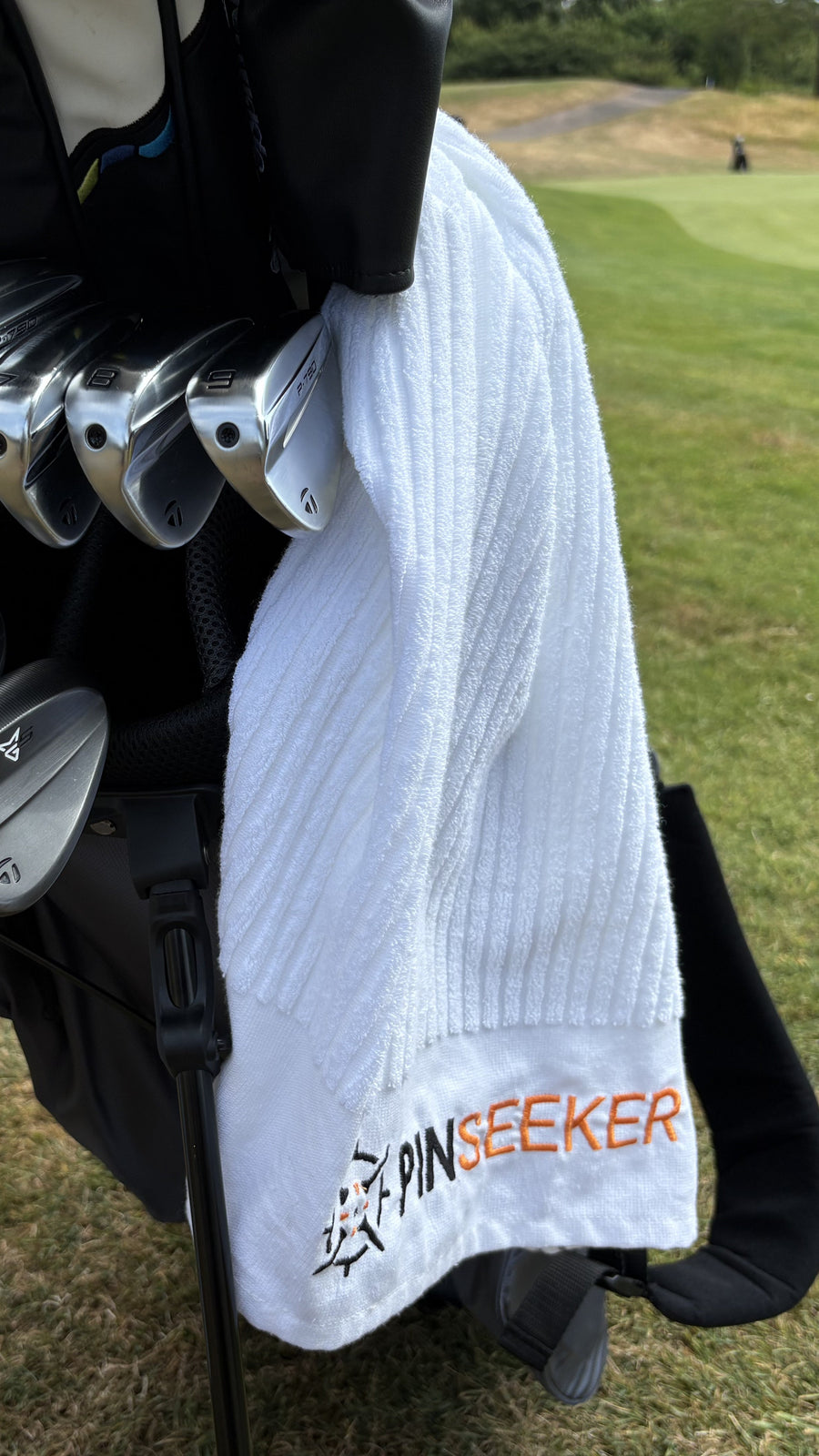
Cotton golf towels, like the PINSEEKER Caddy Golf Towel at 550GSM, tolerate warmer water than microfibre without fibre damage. A 40°C wash is appropriate for a cotton golf towel that has been used in muddy or wet conditions.
The same softener rule applies: avoid fabric softener. Cotton fibres are naturally absorbent, and softener deposits reduce that absorbency in the same way it affects microfibre.
Air dry your cotton golf towel flat and never tumble dry it. Drying it flat preserves the loft, the pile that holds water. Dry fully before storing to prevent mildew.
How Often Should You Wash a Golf Towel?
Wash your golf towel after every two to three rounds, or after any round where it picks up significant mud, sand, or debris from bunker shots. A towel that looks clean on the surface may still have grass and oil residue embedded in the weave from multiple rounds.
If your towel starts to feel less absorbent despite correct washing, the most common causes are softener residue from an earlier wash, lint build-up from washing with other fabrics, or heat damage from a high-temperature dryer cycle.
Removing Softener Residue
If your microfibre towel has been washed with softener and has lost absorbency, a deep wash may partially restore it. Wash the towel at 30°C with half the normal amount of detergent and no softener, then run a second rinse cycle to flush out as much residue as possible. Repeat once. This removes surface deposits but will not fully restore fibres if the coating has set deeply. Prevention is the more reliable approach.
Storage Between Rounds
Store your golf towel fully dry and unfolded where possible, or loosely folded rather than tightly compressed. A towel stored damp will develop mildew within 24-48 hours, which is difficult to remove fully and permanently affects the fabric's smell.
If you pack your bag the evening before a round, leave the towel out until immediately before you leave. Attaching it to your bag while still slightly damp from laundering is one of the most common causes of mildew in golf towels.
For on-course cleaning technique that extends the life of your towel between washes, see the full guide on how to keep your golf clubs clean on the course. For guidance on which towel format suits your bag and playing conditions, see the golf towel size guide.
For the full breakdown of cotton's absorbency advantages in wet conditions, including how the fibre structure differs from microfibre, see the guide on why choose a cotton golf towel.
Shop the PINSEEKER Magnetic Golf Towel →
A clean towel is only half of it: see how to clean golf clubs for the rest of the routine.