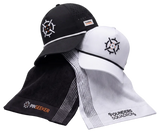
A water-resistant golf cap uses a DWR (durable water-repellent) coating to bead rain off the surface and handles most UK rounds comfortably. A fully waterproof cap uses a membrane with sealed seams to block water completely, and is built for sustained downpours. For drizzle, light showers, and variable weather, water-resistant is sufficient. For a three-hour round in steady rain, waterproof earns its keep.
Waterproof golf caps and waterproof golf hats are the same product wearing two names, and this guide uses cap throughout. Whichever word you search, the construction question is identical: membrane or coating.
The distinction matters because the two constructions perform very differently, feel different to wear, and sit at very different price points. Getting this choice wrong means either overpaying for protection you will never use, or getting soaked on a course where a DWR cap would have been fine.
What Is a Waterproof Golf Cap?
A truly waterproof golf cap uses a laminated membrane between the outer fabric and the lining. The membrane blocks water at the fabric level: most commonly a Gore-Tex Paclite layer or a polyurethane (PU) equivalent. The seams are then fully taped or bonded to close any needle holes. Without seam taping, water would enter through stitch points regardless of how good the outer fabric is.
The result: a cap that holds up in steady rain, hour after hour, without letting water through. The trade-off is weight, breathability, and price. Membrane caps are heavier, often stiffer, and less ventilated during active play because the same construction that keeps rain out also restricts airflow.
Gore-Tex Paclite is a two-layer construction where the Gore-Tex membrane is bonded directly to the outer fabric with a protective inner lining added separately. The "Paclite" designation means it weighs less than standard Gore-Tex builds while retaining full waterproof and windproof certification. In golf caps, this construction is used by a small number of specialist performance brands, typically at higher price points.
What Is a Water-Resistant Golf Cap?
A water-resistant cap, often labelled DWR-treated or water-repellent, uses a surface coating applied to the outer fabric. The coating causes water to bead up and roll off rather than soaking into the fibres. On lightweight synthetic fabrics, this works reliably: a sharp shower will bead visibly and run clear of the brim before it reaches your face or scalp.
DWR caps are lighter, more breathable, and significantly less expensive than membrane caps. The coating is not permanent: it degrades with washing, friction, and UV exposure, but can be reapplied with a spray-on DWR product and reactivated with low heat. The term water-repellent describes the same technology: a hydrophobic surface finish that beads water on contact. The label varies by brand; the mechanism is identical.
The limitation is duration. In light rain or intermittent showers, a DWR cap performs well throughout a round. In a sustained downpour lasting more than 30 to 40 minutes, the coating will eventually saturate and the fabric will wet out, losing its beading effect.
Waterproof vs Water-Resistant: Key Differences
| Feature | Waterproof | Water-Resistant (DWR) |
|---|---|---|
| Construction | Membrane plus sealed seams | Surface DWR coating |
| Handles light drizzle | Yes | Yes |
| Handles sustained heavy rain | Yes | No |
| Breathability | Lower | Higher |
| Weight | Heavier | Lighter |
| DWR can be restored | N/A | Yes, spray-on or heat-reactivation |
| Typical price range | Higher | Lower |
Which Type Suits UK Courses?
For most rounds in the UK, water-resistant is the right choice. UK course conditions run to drizzle, light showers, and variable cloud cover, with brief heavier spells that clear. That is the realistic weather window a DWR cap handles without compromise.
The case for a fully waterproof cap comes down to tolerance and frequency. If you regularly play through heavy, sustained rain and walk off for nothing, a membrane cap gives you a level of confidence a DWR cap cannot match. If you step off when conditions turn seriously bad, a lightweight DWR cap covers everything you will actually face.
For most rounds, a well-made water-resistant cap handles the weather you will actually play in. A fully waterproof cap is a specialist tool for golfers who play through downpours without stopping.
What to Look for in a Water-Resistant Golf Cap
Not all DWR caps are equal. On lightweight synthetic fabrics, the treatment bonds more durably and the base fabric sheds water more aggressively than cotton blends. Cotton holds moisture by nature; synthetic does not. Key things to look for:
- Fabric: Synthetic polyester or nylon holds DWR treatment better than cotton, dries faster, and does not add weight when damp
- Weight: Under 90g keeps the cap from becoming noticeable across 18 holes
- Fit: An adjustable snapback gives a secure fit without trapping heat on warmer rounds
- Brim: A structured brim channels water clear of your eyeline, keeping vision clean in heavy drizzle
- DWR maintenance: If rain stops beading and the fabric starts darkening when wet, hand wash the cap in cool water, air dry it on a rounded surface, then use a spray-on DWR treatment to restore the beading
Matching the Golf Hat to the Conditions
A water-resistant cap with a DWR coating is the all-season workhorse: it sheds drizzle and passing showers, breathes well enough to keep your head cool in summer, and stays light enough that you forget it is on. That versatility is why it is the cap most golfers wear for most rounds of the year, from bright mornings to blustery back nines.
A membrane waterproof golf hat earns its place in a narrower set of conditions: sustained rain, wind driving that rain sideways, and the colder months when you will finish the round however hard it comes down. The laminated construction Gore-Tex made standard stays dry inside through weather that overwhelms any coating, and the extra warmth that comes with it is welcome in January. The same warmth and reduced venting are what you feel in July, which is why serious wet-weather caps tend to live in the bag until the forecast calls for them.
Fit carries more weight on a waterproof cap than a standard one, because a membrane shell is stiffer and sits differently. An adjustable one size closure handles this better than fitted sizing: it goes over a beanie in the colder months, loosens for playing golf in milder weather, and still sits low enough at the brim to keep rain from running down your neck. Many golfers end up with both: the water-resistant cap as the everyday, and a membrane hat held for the days that demand it.
The PINSEEKER Performance Golf Cap is built on a water-repellent synthetic construction, weighs 85g, and fits via an adjustable snapback. It is designed for the realistic range of UK conditions: effective in the drizzle and showers that make up most rounds, without the weight penalty of a membrane cap.
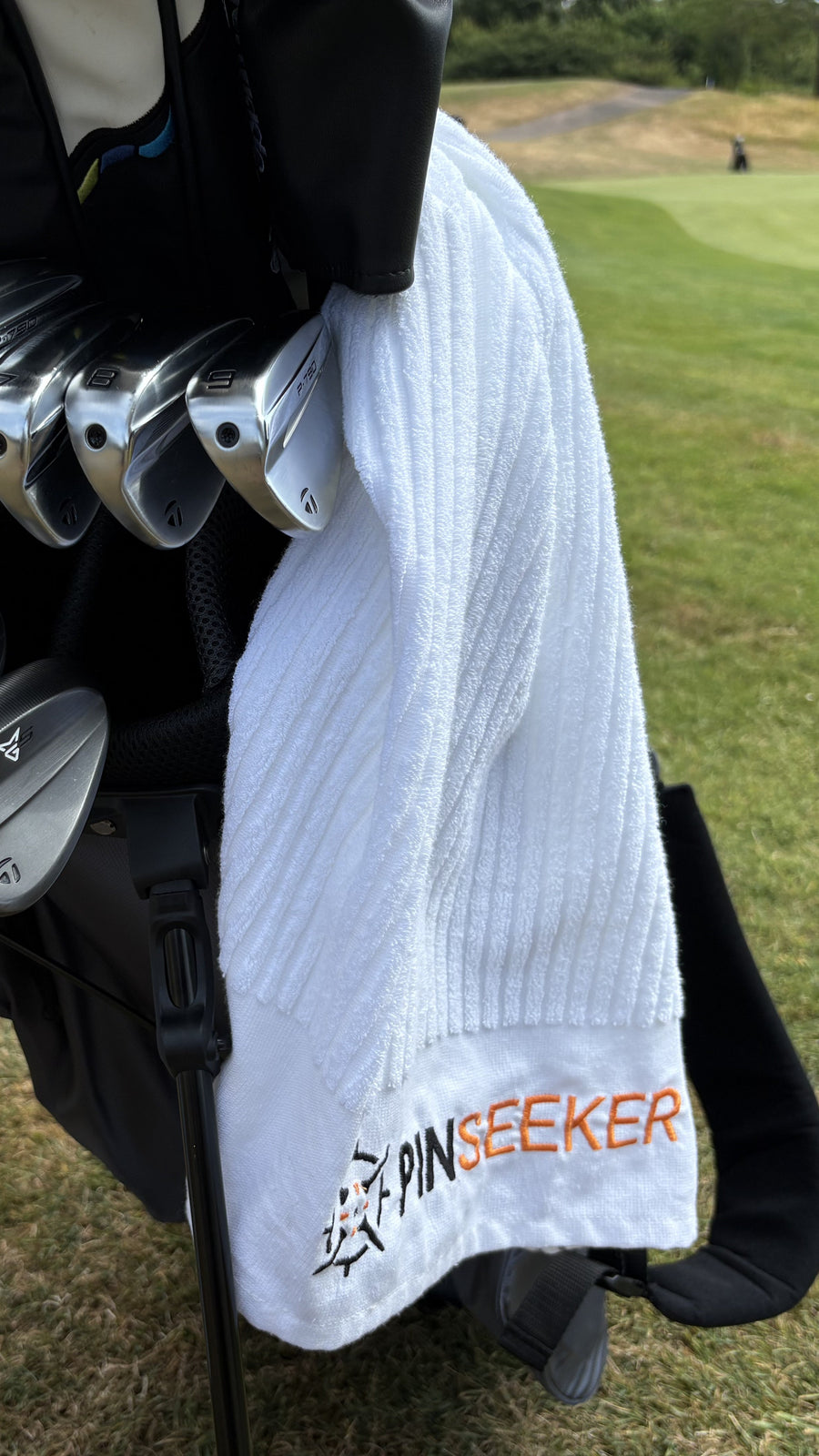
For the rest of your wet-weather setup, the choice of towel material matters as much as the cap. The microfibre vs cotton guide covers why synthetic outperforms cotton when course conditions get wet. For complete wet-round preparation, including how to keep grooves clean across all 18 holes in the rain, see how to keep your golf clubs clean.
For the round itself, from keeping your grips dry to how a wet course plays, read golf in the rain.
Frequently Asked Questions
Is a DWR golf cap the same as a waterproof golf cap?
No. A DWR cap uses a surface coating to repel light rain but does not prevent water penetration in heavy or sustained conditions. A waterproof cap uses a laminated membrane and sealed seams to block water entirely. Both serve different use cases: DWR for the majority of rounds, fully waterproof for sustained heavy rain.
How long does the DWR coating last on a golf cap?
With regular use, factory DWR treatment typically lasts 20 to 40 wash cycles before losing effectiveness. Never put the cap in a tumble dryer; hand wash it in cool water and air dry it on a rounded surface. If rain no longer beads at all, a spray-on DWR product applied after washing will restore performance. Avoid fabric softeners, which degrade DWR treatment.
What does water-repellent mean on a golf cap?
Water-repellent means the fabric carries a DWR treatment that makes water bead and roll off instead of soaking in. The PINSEEKER Performance Golf Cap's shell is water-repellent. In rain it sheds drizzle and passing showers while staying light and breathable. Sustained heavy rain is a sealed membrane's job.